I’ve managed to brush my teeth for 48 years without ever feeling that the process was particularly lacking in technology.
Dyson clearly thinks otherwise.
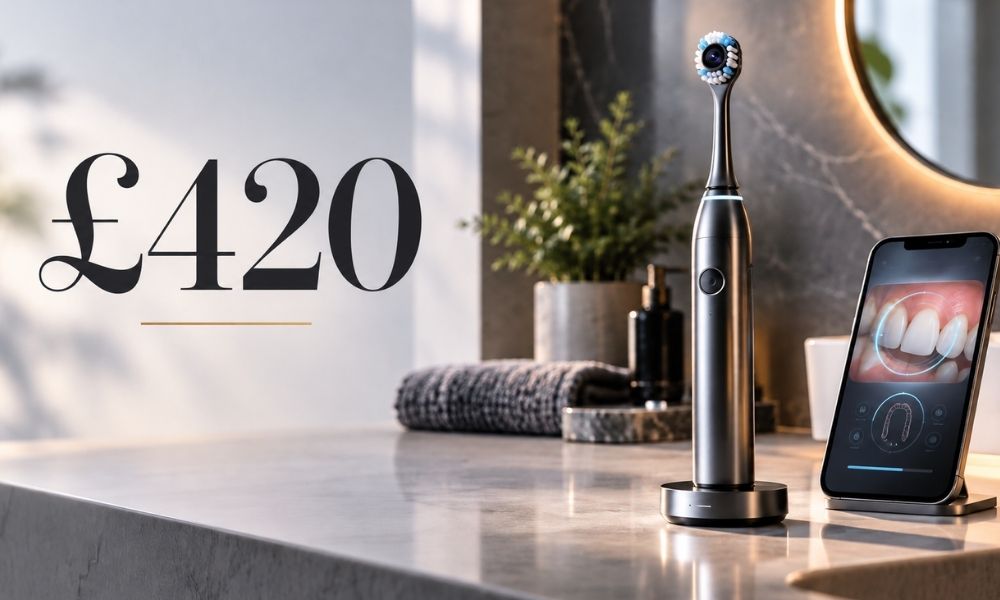
They’ve just launched a new toothbrush.
It costs £420.
Yes. £420.
It has a tiny camera that looks inside your mouth, uses machine learning to identify the gaps between your teeth and then fires mouthwash into them while you brush.
You can even watch what’s happening on your phone.
I’m not entirely convinced I’ve ever wanted to see the inside of my own mouth in quite that much detail, but that’s probably beside the point.
What I find much more interesting is this:
How do you convince somebody that a toothbrush is worth £420?
Because you can’t do that by selling a toothbrush.
There are perfectly good toothbrushes available for a tiny fraction of the price.
You have to sell the reason why somebody might want this toothbrush.
Better dental health.
Cleaning areas you’re currently missing.
Potentially spotting things you wouldn’t otherwise notice.
Technology doing something that a conventional toothbrush simply can’t do.
And, of course, there’s the Dyson name attached to it.
Whether all of that represents £420 of value to you is entirely subjective.
For me?
I’m going to take some convincing.
But there will undoubtedly be people who look at all of those things and decide it’s worth every penny.
And that’s the bit I find interesting from a business perspective.
We tend to talk about price as though it’s something fixed.
“That’s expensive.”
Compared with what?
A £420 toothbrush is ridiculously expensive compared with a £5 toothbrush.
But if somebody believes it helps them avoid several trips to the dentist, suddenly the comparison changes.
We see the same thing in our own business all the time.
A £5,000 website sounds expensive if you think you’re buying some nicely designed pages on the internet.
It might sound rather different if that website generates £100,000 of new business over the next three years.
£1,000 spent on a marketing campaign is a cost.
Until it generates £10,000 of business.
Then nobody particularly cares what it cost.
And I think this is something lots of businesses struggle with.
We spend too much time explaining what something costs and not enough time demonstrating why it’s worth it.
If customers are constantly telling you you’re expensive, perhaps the answer isn’t always to lower your prices.
Perhaps you haven’t done enough to explain the value.
What problem are you solving?
What does that problem currently cost your customer?
What becomes easier, quicker or better after they’ve bought from you?
What could the return be?
Because price and value aren’t the same thing.
And the businesses that understand that don’t necessarily need to be the cheapest.
They just need their customers to understand why they’re worth paying more for.
As for whether I’ll be buying the £420 toothbrush…
Probably not.
But then again, I’ve just spent an entire article talking about it.
So Dyson’s marketing department has already achieved rather more than I thought..!
Have a great week.