Imagine running your entire business with just one customer.
If they left tomorrow, everything would stop.
Yet that’s exactly how many businesses approach marketing. They rely on one channel, one platform or one steady stream of leads and assume it will continue working forever.
Sometimes it’s Google Ads.
Sometimes it’s SEO.
Sometimes it’s social media.
And when that single source slows down, panic sets in.
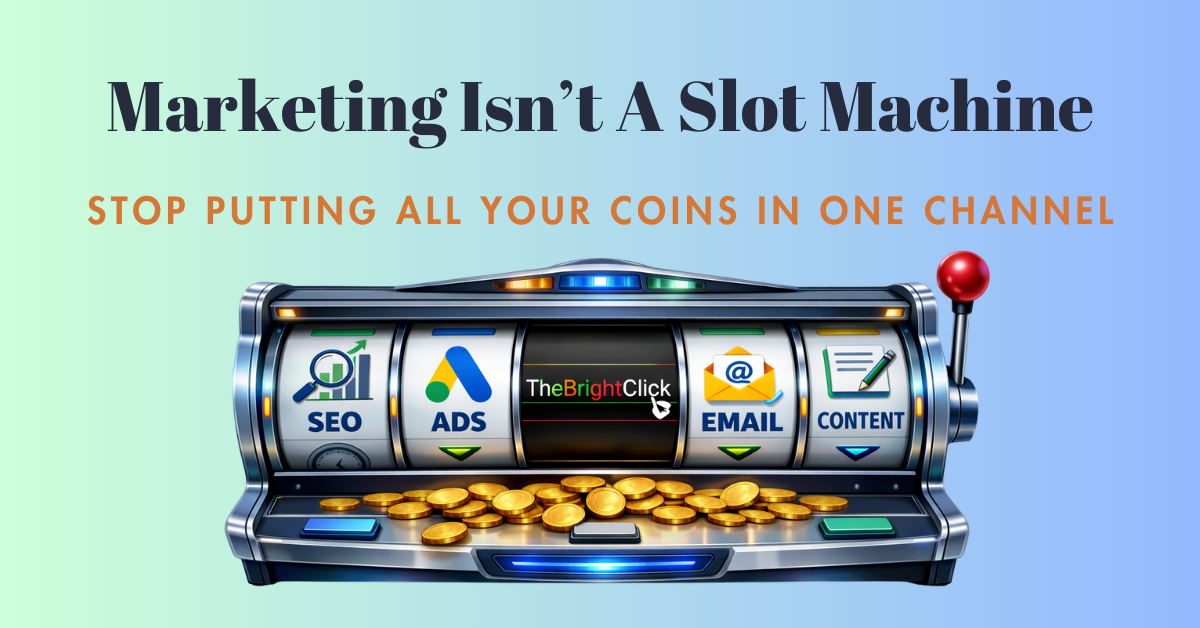
The reality is that modern marketing doesn’t work like a lucky spin on a slot machine. The businesses that grow consistently are the ones building a multi-channel marketing strategy where different platforms support each other.
Because when everything works together, results become far more predictable.
What Is A Multi Channel Marketing Strategy?
A multi-channel marketing strategy means using multiple marketing channels to reach your audience rather than relying on just one.
These channels might include:
- Google Ads
- Search Engine Optimisation (SEO)
- Social media
- Email marketing
- Content marketing
- Reviews and local listings
- Offline marketing
Customers rarely interact with a business in just one place. They move between platforms constantly.
They might discover you through a search, see your brand again on social media, read reviews later and only then decide to get in touch.
A joined-up digital marketing strategy recognises this behaviour and ensures your business appears where people are already looking.
The Problem With Single-Channel Marketing
Putting all your effort into one platform can work for a while. In fact, it often does.
But it also creates risk.
If you rely entirely on paid ads, rising costs can suddenly affect profitability.
If all your traffic comes from SEO, a search algorithm update could change visibility overnight.
If social media is your main source of enquiries, a platform update or drop in reach can quickly reduce engagement.
The issue isn’t that any of these channels are bad. They’re incredibly powerful when used correctly.
The problem is dependence.
One channel is a tactic. Multiple channels are a strategy.
Businesses that rely on just one source of leads often feel like they are constantly reacting rather than growing with confidence.
How Customers Actually Discover Businesses Today
The modern customer journey rarely follows a straight line.
Someone might first find your business through a Google search and click on an ad. They visit your website but don’t enquire yet.
Later that week, they notice your brand again on social media.
A few days later, they search your company name, read reviews and return to your website before finally getting in touch.
No single marketing channel was responsible for that enquiry.
It was the combination of touchpoints that built familiarity and trust.
This is why businesses that appear across multiple platforms tend to attract more enquiries. Their brand becomes recognisable and reassuring.
Good marketing doesn’t rely on one interaction. It builds momentum over time.
The Power Of Joined-Up Marketing
When marketing channels work together, the results are far stronger.
For example:
SEO and Google Ads
Paid ads can drive immediate traffic while SEO builds long-term visibility.
Content and Social Media
Content builds authority and trust, while social media helps distribute it to a wider audience.
Email and Paid Advertising
Ads attract new potential customers, and email marketing nurtures those relationships over time.
Remarketing
Remarketing reconnects with people who have already visited your website but didn’t convert.
Instead of relying on a single point of success, each channel supports the others.
Marketing becomes less about luck and more about structure.
The Hidden Risk Of Platform Dependence
One of the biggest risks businesses face is building their pipeline on a single platform they don’t control.
Algorithms change.
Costs increase.
Competitors enter the market.
Audience behaviour shifts.
When that happens, businesses with only one marketing channel often feel the impact immediately.
Companies with multiple channels are far more resilient.
If one channel slows down, others continue generating visibility and enquiries.
In other words, diversification isn’t just smart. It’s protective.
How Small Businesses Can Start a Multi-Channel Strategy
The good news is you don’t need to be everywhere.
A strong strategy often starts with just a few well-connected channels.
For many local businesses, that might look like:
- Google Ads for immediate visibility
- SEO for long-term growth
- A well-optimised Google Business Profile
- Reviews that build trust
- Social media to reinforce brand presence.
The key is consistency. Messaging should align across platforms so that, wherever potential customers find you, the experience feels connected.
Over time, you can build on this foundation and expand your reach.
Marketing Should Be A System, Not A Gamble
Marketing works best when every channel supports the others.
Businesses that grow steadily aren’t constantly chasing the next tactic. They build systems that create visibility in multiple places at once.
Because if all your leads come from one place, your business is vulnerable.
A strong multi-channel marketing strategy creates stability, increases brand recognition and gives potential customers more opportunities to find and trust you.
And that’s when marketing stops feeling like a gamble and starts feeling like progress.
Need Help Creating A Joined-Up Marketing Strategy?
If you’re unsure whether your marketing channels are working together effectively, our team at The Bright Click would be happy to take a look.
We help businesses build strategies that combine SEO, Google Ads, content and digital campaigns so that each channel strengthens the others.
Drop us a line and see how we might be able to help!
For further insights into multi-channel marketing and digital strategy trends, you can also explore industry resources such as this by SemRush